Home battery rebate Adelaide 2026: the electrical checklist before you buy
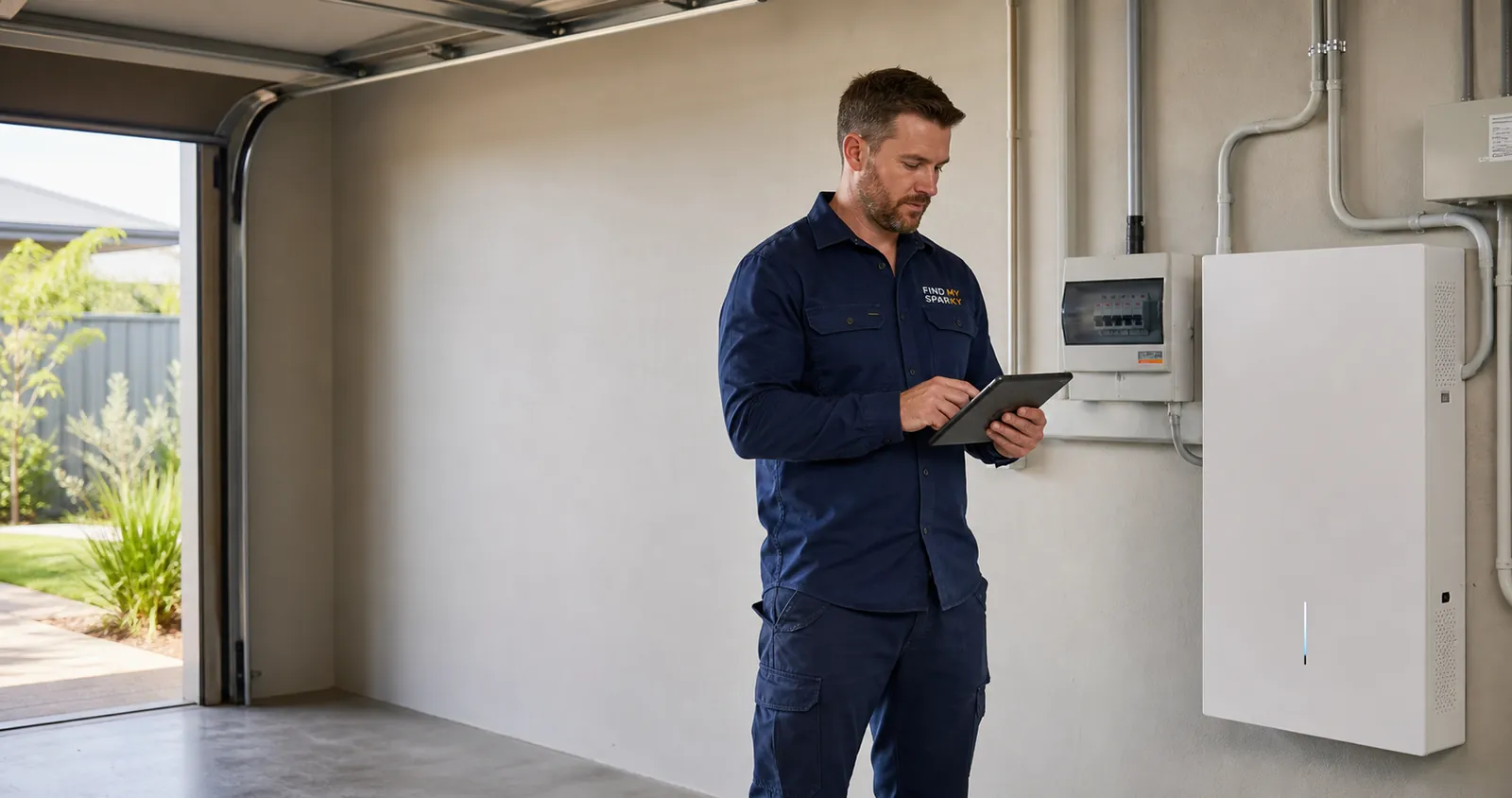
The timing matters. The ACCC reported in July 2026 that more than 400,000 batteries had been installed across Australia in the previous 12 months. It also warned that comparing offers can be difficult where battery, retailer and virtual power plant terms interact.
What is the 2026 home battery discount?
The Australian Government's Cheaper Home Batteries Program provides a discount for eligible small-scale battery systems through the Small-scale Renewable Energy Scheme. Customers commonly see it deducted in the supplier's proposal rather than claiming cash later.
Program settings and certificate values can change. Treat any advertised dollar figure as an estimate until the proposal identifies the eligible battery, usable capacity, certificate calculation and assumptions.
Six electrical checks before you sign
- Switchboard condition and space. Ask whether the board has suitable protection, room and capacity. An older fuse board may need separate work.
- Solar and inverter compatibility. Confirm whether the battery is AC-coupled, DC-coupled or part of a replacement hybrid-inverter design.
- Backup is specified, not assumed. List the circuits you want backed up and ask for continuous and surge-power limits.
- Loads are assessed together. Mention a planned EV charger, induction cooktop, heat-pump hot water or larger air conditioner.
- The location is suitable. Clearances, weather, ventilation, vehicle impact and access must be assessed.
- Credentials and paperwork are clear. SA electrical work must be certified through an electronic Certificate of Compliance.
What should a comparable battery quote show?
Compare usable capacity, not the largest brochure number. A useful quote states battery and inverter models, warranted throughput or cycles, backup inclusions, monitoring, switchboard and metering work, network applications, incentive assumptions, exclusions and the final amount including GST.
Battery, VPP and electricity plan: read all three together
A virtual power plant can reward coordinated charging or export, but plans differ in control, payments, exit terms and compatible equipment. The ACCC found strong savings among surveyed solar-and-battery customers, but that is not a promise for an individual home. Model the proposal against your interval data, tariff and evening use.
Will a battery run the house during a blackout?
Not automatically. Blackout backup needs compatible equipment and a designed changeover arrangement. The quote should name the backed-up circuits and explain the system's power limit. Whole-home backup can behave very differently from backing up refrigeration, lighting, internet and a few outlets.
Questions to send with your quote request
- What usable capacity and eligible discount have you assumed?
- Which circuits work in a blackout?
- Is switchboard, metering, mains or inverter work excluded?
- Who supplies the electrical compliance certificate?
- Can we add an EV charger later without redoing this work?
Need an Adelaide electrical assessment?
Share photos of the closed switchboard, solar inverter label and proposed battery area. Do not remove electrical covers.
Request a quote →Sources and update policy
This guide uses Australian Government battery guidance, the ACCC's July 2026 update and South Australia's compliance guidance. Reviewed 25 July 2026.
Editorial note: General information only. Eligibility, savings and suitability depend on the property and current rules.